

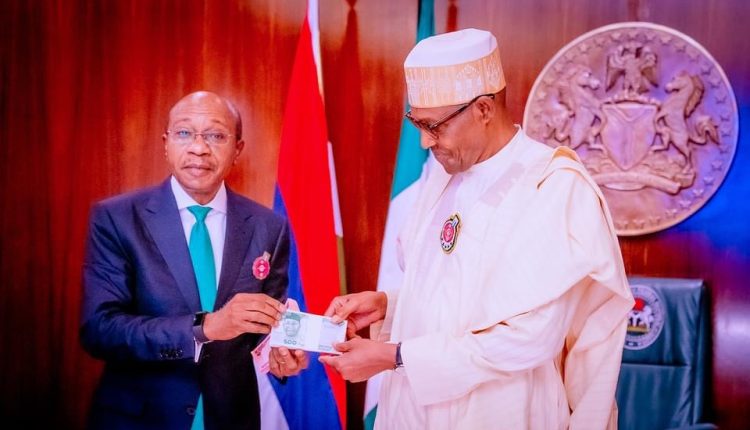
The highly controversial naira redesign policy implemented in the run-up to the 2023 general election was approved by former President Muhammadu Buhari with a specific security and anti-corruption objective, according to a new book on his administration.
The book, ‘From Soldier to Statesman: The Legacy of Muhammadu Buhari’, authored by Dr. Charles Omole, details that the policy was not designed to target any political party, as many political actors had alleged at the time.
The account, citing former Director-General of the DSS, Yusuf Bichi, explains that the initial proposal for the naira redesign originated from the then-chairman of the Economic and Financial Crimes Commission (EFCC).
The primary goal was to limit the use of cash for vote-buying, which security agencies were concerned about.
Buhari reportedly “accepted the rationale behind the proposal and approved the policy.”
The book asserts that Buhari was confident in the electoral success of the APC’s presidential candidate, Asiwaju Bola Tinubu, and therefore did not view the policy as a partisan threat to his own party.
As the policy became mired in controversy and accusations of partisanship, the book noted that Buhari maintained that law enforcement agencies should act within their mandates, and that the state should not be used for political advantage. He even ordered an internal review of the policy’s origins and implementation, demanding reports be submitted directly to him.
The book concludes that the naira redesign policy was fundamentally conceived as part of efforts to address the influence of money in elections rather than as a partisan political action. Read Full Original